
In 2026, the digital marketing landscape has fractured. While brands fight a costly war for fleeting attention on TikTok and Meta, a quieter, more powerful revolution is happening on Pinterest.
Pinterest has shed its skin as a social network. It is now a fully matured Visual Intelligence Engine. Users don’t come here to see what their friends are doing; they come to design their future.
For marketers, this distinction is critical. A post on social media decays in hours. A properly optimized Pin on Pinterest is a digital asset that compounds in value, driving traffic for months or even years.
If you are still optimizing for likes or treating Pinterest like a digital scrapbook, you are operating on an obsolete playbook.
To rank in 2026, you must understand Semantic Entity Indexing, Visual Continuity, and the new Engagement Velocity signals.
This guide is your architectural blueprint for building a traffic engine that outlasts the trends.
Table of Contents
Key Takeaways for 2026
- Relevance Over Recency: Unlike social feeds, Pinterest prioritizes the most accurate visual answer, not just the newest one.
- The Save Signal: A Save is now a stronger ranking factor than a Like because it signals future intent and archival value.
- Visual Continuity: The aesthetic of your Pin must match your landing page to reduce pogo-sticking (bounces), which is a primary negative ranking factor.
- Entity Mapping: The algorithm understands that Renovation is semantically linked to Contractors and Budgeting. You must target topic clusters, not just isolated keywords.
1. Understanding Pinterest SEO
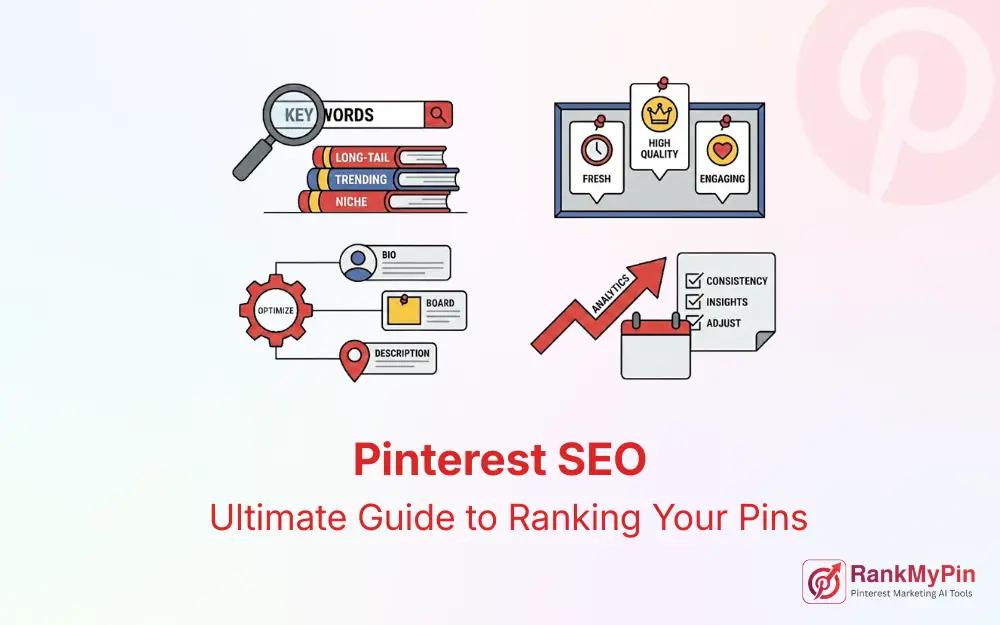
To win Pinterest SEO, you must stop posting and start indexing. Pinterest processes billions of visual queries daily, operating more like Google Images than Instagram.
How Pinterest Search and Discovery Work
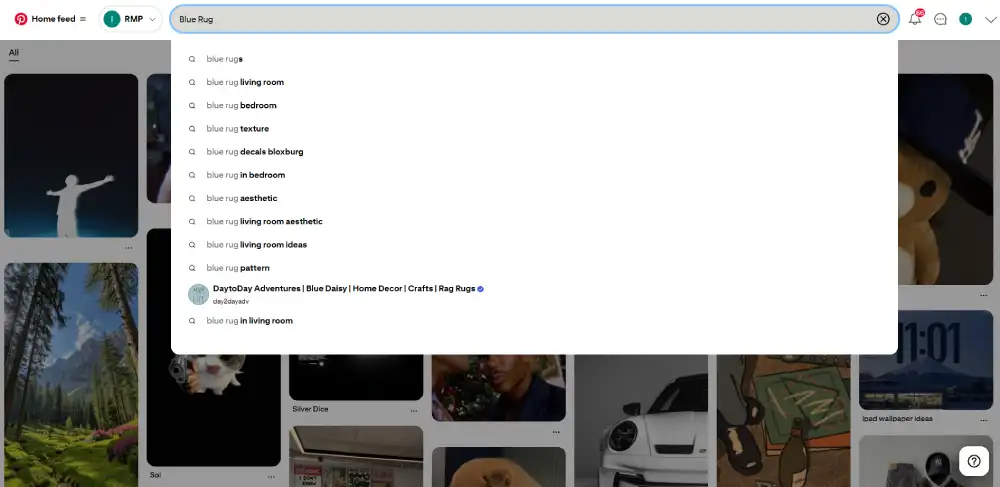
The engine uses a dual-process system: Semantic Retrieval (text-based) and Visual Retrieval (img/pixel-based).
When a user searches for Modern Home Office, Pinterest doesn’t just look for those words in your description.
It scans your image to confirm it looks like a modern home office. If your text says Office, but your image is a generic quote card, the system detects a mismatch and suppresses the Pin.
The Role of SmartFeed and Guided Search
The SmartFeed is the personalized home stream where most discovery happens. In 2026, this feed is driven heavily by Related Entities.
If a user interacts with Vegan Meal Prep, the SmartFeed will surface your Glass Storage Containers pin, even if they didn’t search for it directly, because the Knowledge Graph links those two concepts.
User Intent: Inspiration, Planning, and Buying
You must categorize every piece of content into one of three buckets:
Inspiration (Top of Funnel): Dream Backyard Ideas. (Goal: Saves/Reach).
Planning (Middle of Funnel): Drought-Resistant Landscaping Plans. (Goal: Clicks/Reads).
Buying (Bottom of Funnel): Best Solar Garden Lights 2026. (Goal: Conversion).
Actionable Insight: Do not try to sell a product on an Inspiration keyword. Match your format to the user’s mindset.
Knowing how Pinterest works is powerful, but results come from having a Pinterest SEO Roadmap that shows you exactly what to do next.
2. Advanced Pinterest SEO Strategies for 2026
Staying ahead means moving beyond basic optimization. Leverage tools, checklists, and clear roadmaps to create a Pinterest SEO strategy built for long-term growth.
Trend Prediction and Early Content Publishing
Become a Trend Setter, not a follower.
The Predicts Protocol: Use the annual Pinterest Predicts report as your editorial calendar. If Pinterest says Jellyfish Aesthetics is the next big thing, start creating boards and content for it before the search volume arrives. Being the First Mover gives you Legacy Authority on the keyword.
Repurposing Top-Performing Pins Across Formats
Squeeze every drop of value from your winners.
The Asset Waterfall: If a standard pin goes viral, immediately turn it into an Idea Pin (Video), a Carousel Pin (Tutorial), and a Product Pin (Shop). The algorithm has already validated the topic; you just need to expand the format.
Cross-Platform SEO and Social Amplification
Pinterest does not live in a vacuum.
The Newsletter Boost: When you publish a new, high-value Pin, link to it in your email newsletter.
This sends a surge of external traffic to the pin, artificially creating the High Velocity signal that triggers the algorithm to show it to more people on Pinterest.
Google Image Search: Remember that Pinterest ranks incredibly well on Google. By optimizing your Pin Title and Alt Text for Pinterest SEO, you are often simultaneously ranking on the first page of Google Images, opening a secondary floodgate of traffic.
3. Optimizing Your Pinterest Profile
Your profile is the foundation of your account authority. If the algorithm doesn’t trust your domain, your individual Pins will hit a ceiling.
Choosing a Search-Friendly Username
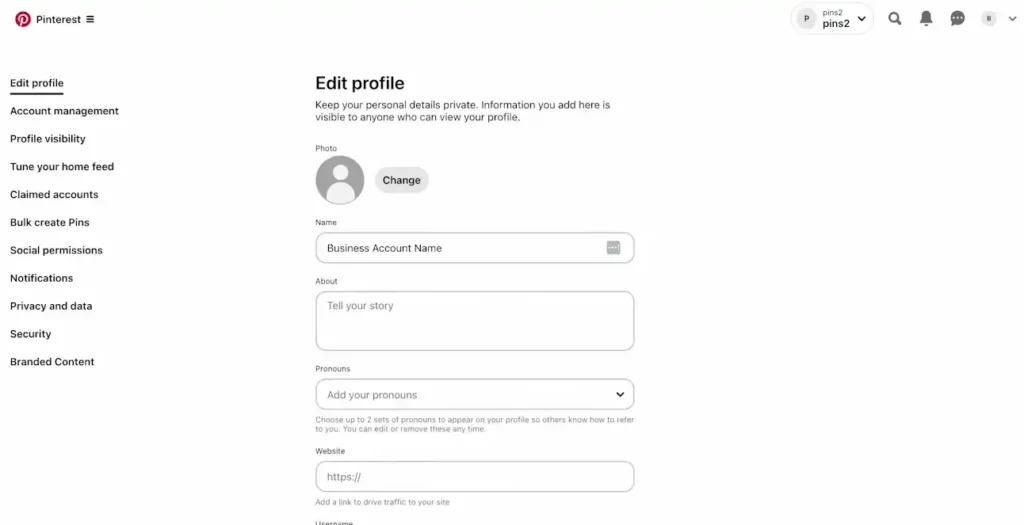
Your username becomes your URL slug. Avoid generic handles like user123.
Best Practice: Combine your Brand Name + Main Keyword. (e.g., @SarahsKitchen_VeganRecipes). This sends a permanent signal to search engines about your niche relevance.
Read our full guide to Pinterest SEO best practices for the best results.
Writing a Bio That Aligns With Your Niche
Your bio is indexed metadata. Use it to state your value proposition clearly using semantic keywords.
Bad: I love cooking and cats.
Good: Helping busy parents master meal prep with easy 30-minute recipes and budget-friendly shopping lists.
Claiming Your Website and Using Business Features
You must claim your website in settings. This places a verification checkmark next to your URL.
Verified domains get a trust multiplier in distribution because Pinterest knows the content source is legitimate. Unclaimed domains are treated as guest content, which is prioritized lower.
4. Engagement and Algorithm Signals
Understanding how the machine feels about your content is the key to ranking. The algorithm reads user behavior to assign a quality score to every asset.
How Saves, Clicks, and Dwell Time Influence Rankings
Not all interactions are equal. The algorithm uses a Weighted Signal system.
The Save (High Authority): This is the strongest signal for Search Visibility. A save tells Pinterest, This content is worth keeping. It categorizes your pin as reference material.
The Click (High Intent): This is the strongest signal for Distribution. It tells Pinterest, This content solves a problem.
The Long Click (Relevance): If a user clicks through and stays on your site for >60 seconds, your Pin Quality Score increases. If they bounce in <5 seconds, your score drops.
Building Trust With Quality, Consistent Content
Trust is an accrued metric. It takes time.
The Sandbox Effect: New accounts often face 3 months of low reach. The only way out is consistency. You cannot hack trust; you must earn it by proving you won’t abandon the platform.
Positive Sentiment: Avoid clickbait titles. If users report your pin or hide it from their feed, these Negative Signals can tank your entire domain authority.
Understanding the Role of AI and Machine Learning
The algorithm now creates Personalized Indexes.
User Affinity: If a user engages with three of your pins, the AI creates a temporary bond. It will show them your next pin automatically. This is why sticking to a strict niche is vital; if you switch topics, you break this affinity bond.
5. Driving Traffic and Conversions
Traffic is vanity; conversion is sanity. The ultimate goal is to move users from the app to your ecosystem.
Aligning Pins With Landing Pages
The Information Scent must be strong.
Headline Match: The text on your Pin overlay should nearly match the H1 headline on your landing page. If the Pin says 5 Vegan Hacks and the page says My Kitchen Story, the scent is lost, and the user leaves.
Visual Continuity: Use the same hero image on your blog post that you used in the Pin. This visual confirmation reassures the user that they clicked the right link.
Optimizing Pages for Pinterest Traffic
Pinterest users are predominantly mobile and impatient.
The Above the Fold Rule: The answer to the user’s query must be visible without scrolling. If they have to scroll past five pop-ups and a long intro to find the Recipe or Tip, they will bounce.
Simplified Navigation: Remove distractions. Create a Bridge Page experience that focuses entirely on delivering the value promised in the pin.
Mobile UX, Page Speed, and Clear CTAs
Speed is SEO: A slow site hurts your rankings because Pinterest tracks load times. Optimize your images and scripts.
The Soft CTA: Pinterest traffic is cold. They might not be ready to buy immediately. Use a Soft CTA, like an email opt-in or a free download, to capture the lead before trying to sell the product.
Measuring Click Quality and ROI
Don’t just count clicks; count Qualified Clicks.
UTM Tracking: Use unique UTM parameters for your Pinterest pins to track exactly which pin designs lead to sales or sign-ups in your Google Analytics.
6. Keyword Strategy for Pinterest SEO
You cannot rank if you don’t know the language of your customer. In 2026, keyword research is about finding High-Intent phrases that competitors are ignoring.
How to Find High-Intent Keywords
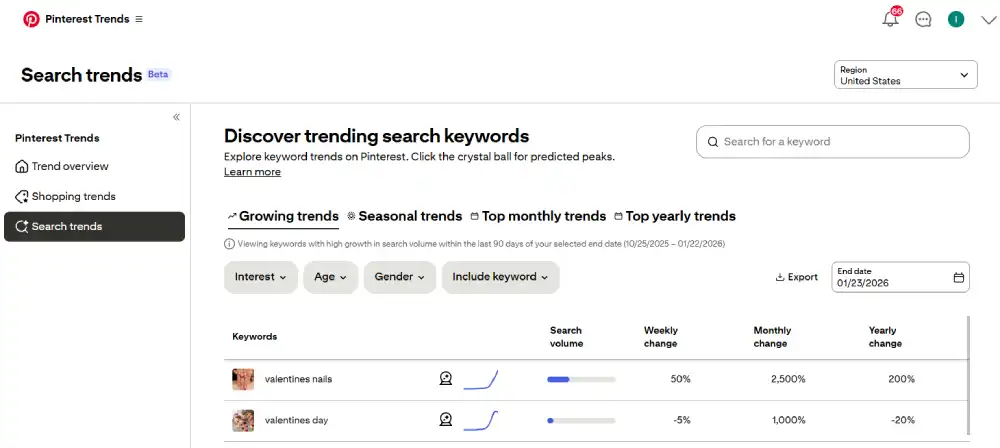
The most accurate tool is the Pinterest search bar itself.
The ABC Method: Type your root keyword followed by a, then b. (e.g., Running Shoes a… might reveal Running Shoes Aesthetic, while Running Shoes b… reveals Running Shoes Best Brands).
Why it works: These suggestions are ordered by real-time search volume. They represent exactly what users are typing right now.
Long-Tail Keywords and Seasonal Trends
Broad keywords like Weddings are vanity metrics. You will never rank for them, and they convert poorly.
The gold is in the Long-Tail: Rustic Barn Wedding Decorations on a Budget. These users are specific. They are ready to act.
Strategy: Use the native Pinterest trends tool to identify when specific long-tail queries spike (e.g., searches for Summer Salads actually begin rising in April, not June).
Competitor Keyword Analysis
Look at the top-ranking Pins for your target term.
Analyze the More Like This feed: Click a competitor’s Pin and scroll down. The Pins suggested below it share the same Entity Tags.
Reverse Engineer: If all the related Pins use the word Minimalist, the algorithm has associated that aesthetic with your topic. Add that term to your metadata.
7. Pin Optimization (Visual, Textual, and Technical)
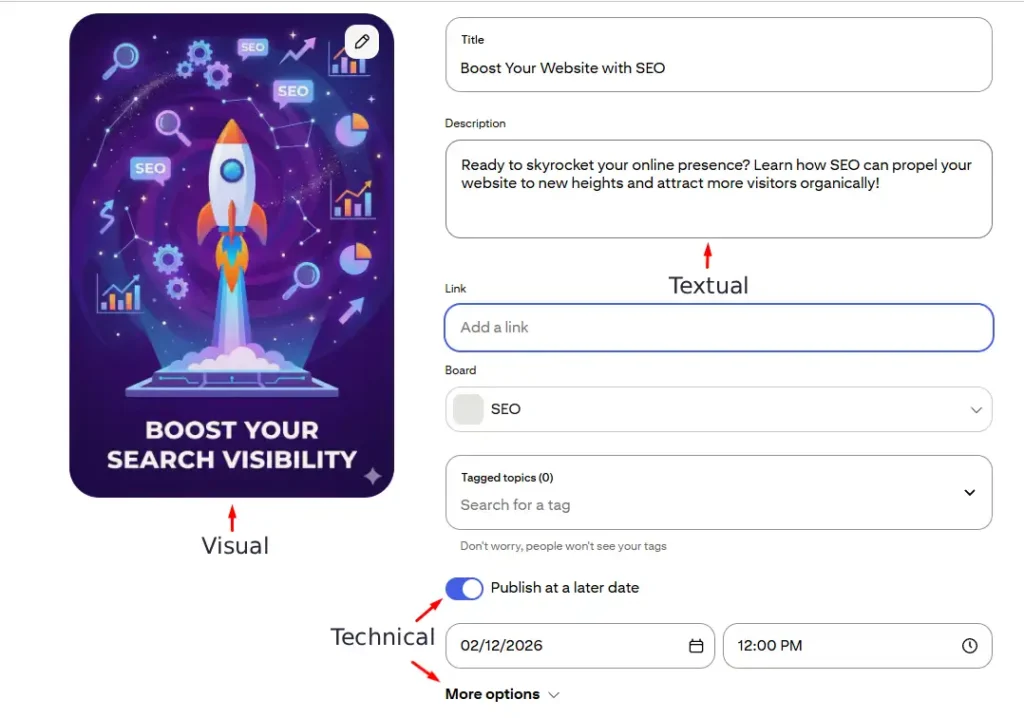
The Pin itself is the atomic unit of Pinterest. Optimization happens in three layers: visual, textual, and technical.
Crafting Titles and Descriptions That Rank
Your Pin title is the H1 tag.
Front-Load Keywords: Put the most important phrase in the first 30 characters.
“Pinterest SEO Guide: How to Rank performs better than My thoughts on how to rank on Pinterest SEO.”
Natural Descriptions: Do not keyword stuff. Write 2-3 natural sentences that weave in your keywords.
“The 2026 Semantic Brain uses Natural Language Processing (NLP) and penalizes robotic lists of words.”
Designing Vertical Pins That Convert
The 2:3 aspect ratio (1000 x 1500px) is non-negotiable.
Mobile First: 85% of usage is mobile. Horizontal images vanish in the feed.
Text Overlay: The text on your image is read by the AI via OCR (Optical Character Recognition). Use bold, high-contrast fonts that reinforce your keyword.
Leveraging Rich Pins and Metadata
Rich Pins are a technical requirement for eCommerce and bloggers. They pull live data from your site (Price, Stock, Ingredients, Author) and display it on the Pin.
The Impact: Pins with Rich Data have a significantly higher Click-Through Rate (CTR) because they establish trust before the click.
8. Pinterest Board Strategy and Optimization
Boards are the directories of your library. They provide context to the Pins inside them.
Naming Boards for Search Discoverability
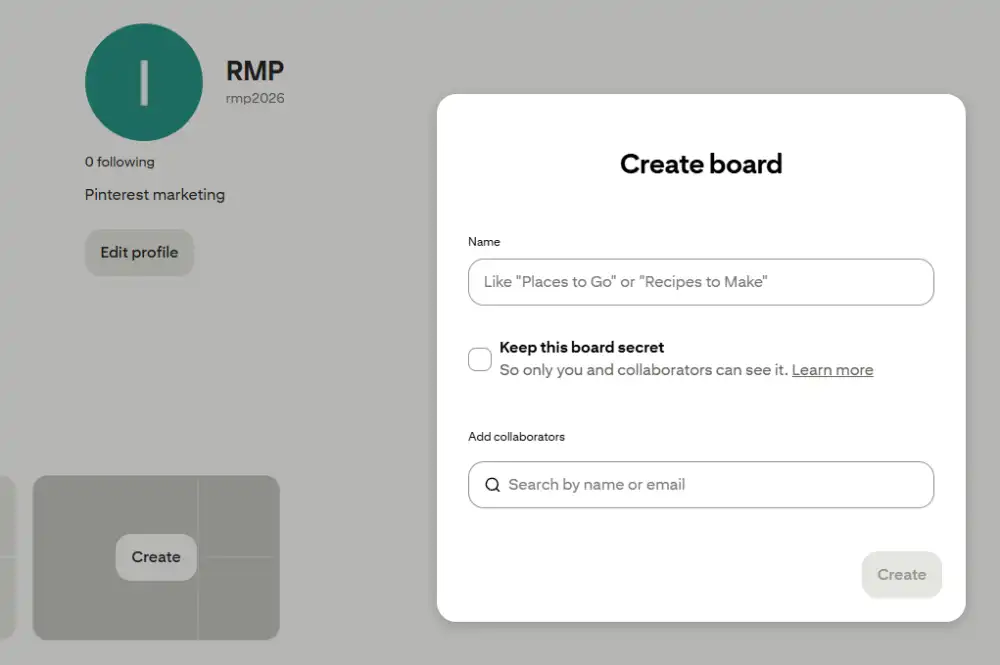
Clear is better than clever. Use literal, search-friendly names.
Avoid: Yummy Stuff or My Style.
Use: Gluten-Free Desserts or Capsule Wardrobe Essentials.
If a user has to guess what is inside the board, the name is failing SEO.
Organizing Boards Into Topic Clusters
Use a Parent/Child structure to build authority.
Parent Board: Home Workouts (Broad).
Child Board: HIIT Cardio for Beginners (Specific).
Child Board: Yoga for Flexibility (Specific).
When you save a Pin to the specific Child Board first, you give the algorithm a precise signal. When you later save it to the Parent Board, you reinforce the broader category.
9. Pinterest SEO Common Pitfalls and Mistakes to Avoid
Even seasoned marketers fall into traps that worked in 2023 but are toxic for Pinterest SEO in 2026.
Keyword Stuffing and Off-Niche Content
The algorithm now penalizes keyword density that exceeds natural language patterns.
The Error: Writing descriptions like Summer outfits, summer fashion, cute summer dress, beach wear.
The 2026 Reality: This triggers the Spam Classifier. The Semantic Brain expects full sentences. Additionally, pinning off-topic content (e.g., a Marketing account pinning Dog Memes) dilutes your Niche Authority Score.
Inconsistent Pinning or Poor Quality Images
Pinterest measures Pinner Reliability.
The Error: Binge-pinning 50 items on Sunday and disappearing for a week.
The Fix: The algorithm prefers a steady heartbeat of 1-5 pins daily. Furthermore, low-resolution or dark images are rejected by the Pinterest image recognition AI before they even reach the search index.
Ignoring Board Organization or Analytics
Treating boards like junk drawers confuses the crawler.
The Error: Pinning a Keto Recipe to a generic Food board mixed with Cupcakes.
The Fix: Maintain strict discipline. If a pin doesn’t fit a specific board perfectly, create a new board.
Unrealistic Expectations for Instant Results
Pinterest is an SEO channel, not a viral social channel.
The Reality: New accounts often face a Sandbox Period of 3-6 months, where reach is artificially throttled while the algorithm verifies your trust signals. Quitting in month two is the most common reason for failure.
10. Content Strategy and Publishing
In 2026, a sporadic publishing schedule is a ranking death sentence. The algorithm favors accounts that operate like media publishers, not casual users.
Fresh Pins vs. Evergreen Content
The definition of Fresh Content has tightened. It is no longer enough to just change the background color of an image.
The Visual Variance Rule: The AI compares your new pin against your old pins. If the visual similarity score is too high (e.g., >90%), it treats the new pin as a duplicate.
You must significantly alter the visual composition, zoom level, angle, or subject placement to trigger a Fresh Pin boost.
The Evergreen Ratio: Aim for a library where 80% of your pins are Evergreen (timeless solutions) and 20% are Trending (news/seasonal). Evergreen content provides the base layer of traffic, while trends provide the spikes.
Scheduling Pins for Maximum Reach
The Best Time to Pin is a myth; the Best Consistency is the reality.
The Drip Method: Do not dump all your content on Monday morning. Use a scheduler to release pins at 2-hour intervals. This ensures your profile is constantly active, signaling to the Pinterest SEO algorithm that you are a reliable source.
Time Zone Logic: Pin when your audience is awake, not when you are. If your analytics show a heavy US user base, align your schedule to EST evenings.
Planning Ahead for Trends and Seasonal Searches
Pinterest is a Time Machine. Users live in the future.
The 60-Day Horizon: While the 45-day rule is standard, competitive niches (like Weddings or Christmas) require a 60-day lead time.
The Ghost Period: When you publish seasonal content early, it will get zero views for weeks. This is normal. The algorithm is indexing and categorizing the pin so that when the search volume explodes, your pin is already sitting at position zero.
Balancing Organic and Paid Strategies
Organic builds trust; paid builds velocity.
The Hybrid Boost: Use a small ad budget to ignite a high-potential organic pin. Once the pin gains enough engagement data (Saves/Clicks), turn off the ad. The pin will often maintain its high ranking organically because the velocity signal has been established.
11. Tools and Analytics for Pinterest SEO
You cannot improve what you do not measure. In 2026, data literacy is a requirement.
Pinterest Analytics for Tracking Performance
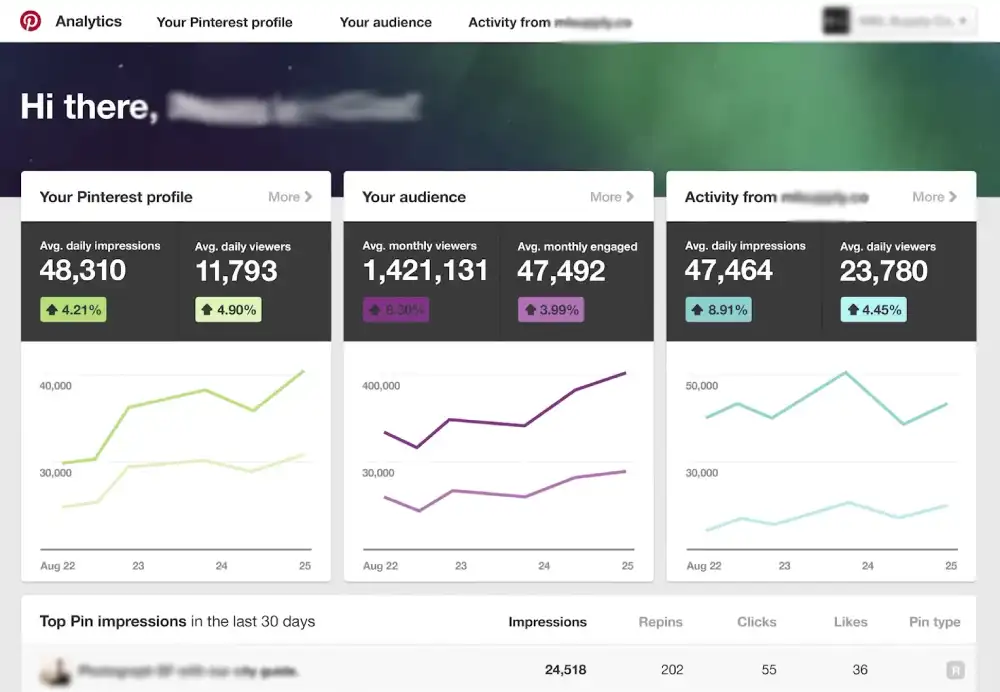
The native dashboard offers Entity Insights.
Top Boards Analysis: Look at which boards are driving the most impressions. This tells you which Topics you have authority in. Double down on content for those specific boards.
Audience Interests: Use this tab to find Adjacent Niches. If your Home Decor audience is also interested in Sustainable Living, creating content at that intersection is a guaranteed win.
Third-Party Tools for Scheduling, Tracking, and Insights
While native scheduling is fine, third-party tools offer Evergreen Recycling.
The Loop Strategy: Some tools allow you to re-queue your best-performing pins to be published to different relevant boards over the course of a year. This maximizes the lifespan of a single asset without manual work.
12. Future of Pinterest SEO
To win tomorrow, you must understand where the platform is going. The trajectory for Pinterest SEO is clear: less Social, more Utility.
Shifts in User Behavior and Algorithm Focus
Users are moving away from Aspirational Browsing (dreaming) toward Actionable Planning (doing).
The Shift: The algorithm is prioritizing content that helps users finish a project. Pins that lead to dead ends or vague landing pages will be de-ranked.
Relevance, Consistency, and Trust in 2026
The era of the Anonymous Viral Curator is over.
The Future: Pinterest is moving toward a verified entity model. The algorithm wants to know who is behind the content. Brands that claim their domains, verify their merchants, and maintain consistent publishing schedules will receive a Trust Moat.
How AI and Visual Search Will Shape SEO
Pinterest Lens (camera search) is becoming the primary search bar for Gen Z.
The Implication: People will search by snapping a photo of a shoe or a sofa, not by typing words. Your Visual SEO (image clarity, object isolation) will soon matter more than your text descriptions.
Pinterest SEO FAQs (2026 Edition)
How does Pinterest SEO work?
Pinterest SEO works by matching the visual data of your image and the keywords in your text (Title, Description, Board Name) with a user’s search query. It assigns a relevance score to your content based on Domain Quality, Pin Quality, Pinner Quality, and Topical Relevance.
How many pins a day on Pinterest 2026?
For 2026, quality beats quantity. The recommended frequency is 1 to 5 fresh pins per day. Posting more than 25 pins a day can trigger spam filters. It is better to pin 3 high-quality, new images daily than to mass-repin 50 old images.
Can you still make money on Pinterest in 2026?
Yes, you can absolutely make money on Pinterest in 2026. The primary methods are driving traffic to a blog (ad revenue), affiliate marketing (using direct affiliate links on Pins), and selling physical or digital products via Product Pins and the Verified Merchant Program.
How to make a Pinterest post go viral?
To make a Pin go viral, combine a high-trending topic (check Pinterest Trends) with a visually striking vertical image (2:3 ratio) and a curiosity-inducing text overlay. Saves are the viral fuel, if users save your pin to their boards, Pinterest shows it to all of their followers, creating a snowball effect.
What are the biggest niches on Pinterest?
The biggest niches on Pinterest in 2026 remain Home Decor, Food & Drink (Recipes), DIY/Crafts, Beauty, and Fashion. However, strictly informational niches like Personal Finance, Education, and Tech are seeing the fastest year-over-year growth due to the rise of Infographic-style learning.
What is the 80/20 rule for SEO?
In the context of Pinterest SEO, the 80/20 rule suggests that 80% of your results will come from 20% of your pins. Focus your energy on creating high-quality Fresh Pins (the 20% effort) that drive the majority of your traffic, rather than spending time on low-value activities like following random accounts or organizing old boards.
Conclusion
Pinterest SEO in 2026 is a discipline, not a lottery. It requires a fundamental shift in how you view the platform: not as a place to be social, but as a place to be indexed.
By treating your profile as a searchable library, optimizing your entities, respecting the Pinterest image recognition AI, and committing to the long game of consistency, you are building one of the most valuable assets in digital marketing: a traffic source that you own, that compounds over time, and that requires zero ad spend to maintain.
Step-by-Step Next Actions for Ranking Pins
- Audit: Use the Pinterest SEO Score Checker to identify and fix broken links or empty board descriptions.
- Optimize: Rename your top 5 boards using high-volume keywords found in the Pinterest search bar.
- Create: Design 5 Fresh Pins for your highest-converting blog post and schedule them for next week.
The best time to plant a tree was 20 years ago. The best time to start your Pinterest SEO strategy is today. Go build your traffic engine.