
Pinterest changes fast. In fact, Pinterest SEO advice often expires faster than milk. What worked six months ago might actually hurt your account today.
The problem is that bad advice spreads quickly. You see a viral pin from 2023, and you try to copy its strategy.
You read a blog post that tells you to delete pins or join huge group boards. But when you try these things in 2026, your traffic drops.
Why does this happen? Because most people treat Pinterest like a social media app. They think it’s about likes and followers.
But the platform is actually a visual search engine. It uses a complex computer system to organize ideas, not a social feed to show off photos.
If you believe the wrong Pinterest SEO myths vs facts, you are wasting time. You might be creating content that the computer system (algorithm) ignores completely.
This guide is here to fix that. We will look at the biggest myths for 2026. We will explain why the old advice is wrong and show you exactly what to do instead to get real traffic.
Table of Contents
Quick Takeaways: The Truth About 2026
- It’s Not Just Keywords: You can have the perfect keywords, but if your image is confusing, you won’t rank.
- More Isn’t Better: Posting 50 times a day looks like spam. Consistency (doing it every day) beats volume.
- Hashtags Are Dead: They clutter your description. Use real sentences instead.
- New Accounts Can Win: You don’t need to be famous. You just need to be clear.
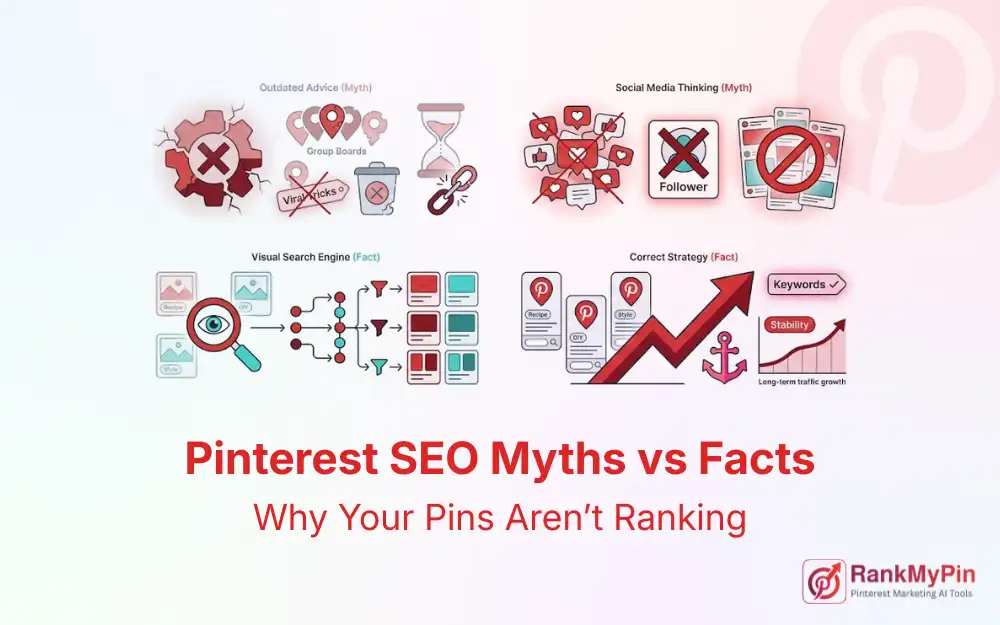
The Real Problem: Treating Pinterest Like a Social Network
Before we bust the specific myths, we need to understand the root cause. Most bad advice comes from Instagram Logic.
On Instagram, you post to get a reaction now. You want likes in the first hour. You want followers to comment.
On Pinterest, you post to get a result later.
- Social Networks (Instagram/TikTok): Focus on who you are (Identity).
- Pinterest: Focuses on what you offer (Utility).
The computer system at Pinterest doesn’t care if you are popular. It cares if your Pin solves a problem. If you try to be an Influencer instead of a Resource, you will struggle.
Myth #1: Pinterest SEO Is Just About Keywords
The Myth: If I put the word ‘Vegan Recipe’ in my description 10 times, I will rank for Vegan Recipes.
The Fact: Keywords are just the start, not the finish line.
In 2026, Pinterest is smart. It doesn’t just count your words; it tries to understand your meaning. This is called Semantic Indexing.
If you write “Healthy Dog Food” in your title, but your picture shows a cat, the system gets confused. It sees a mismatch. Even though your keywords are perfect, your visual signal is wrong.
Why This Myth Kills Reach:
- Keyword Stuffing: Writing a list of words (Dog, Puppy, Food, Kibble, Cute) looks like spam. The system prefers real sentences.
- Visual Mismatch: If your image is abstract or blurry, the computer can’t see the topic. It ignores your keywords because it doesn’t trust the image.
What to Do Instead:
Follow Pinterest’s best practices: make sure your image and your words tell the same story. If your keyword is Red Shoes, show a clear photo of red shoes.
Myth #2: Posting More Pins Automatically Increases Traffic
The Myth: I need to pin 30 times a day to grow.
The Fact: Posting too much without quality hurts your account.
Years ago, dumping content worked. Today, Pinterest wants quality. It has a filter that watches for accounts that act like robots.
If you post 50 pins in one hour, you look like a spammer. The system will throttle (slow down) your reach.
It assumes you are sharing low-quality junk, which goes against the community guidelines regarding repetitive content.
The Quality Over Quantity Rule:
- 1 Great Pin: A Pin with a clear image, good title, and correct link.
- 10 Bad Pins: Blurry images, same links, or vague.
- Result: The 1 Great Pin will get more traffic than the 10 Bad Pins combined.
What to Do Instead:
Focus on a steady schedule. Posting 2 to 5 high-quality pins every single day is much better than posting 50 pins once a week.
Myth #3: Group Boards Are a Major Ranking Advantage
The Myth: I need to join big Group Boards to get my pins seen by thousands of people.
The Fact: Group boards are mostly dead for SEO.
In 2018, Group Boards were a magic trick. You could join a board with 100,000 followers, pin your content, and get instant views.
But spammers ruined it. They filled Group Boards with junk. Because of this, Pinterest downgraded them.
Now, the algorithm assumes content on Group Boards is less relevant than content on your own specific boards.
Why They Fail:
- Confused Topics: A Bloggers United group board has recipes, fashion, tech tips, and travel photos all mixed together. This confuses the computer. It doesn’t know what the board is actually about.
- Low Engagement: People join these boards to drop their own links, not to save other people’s pins.
What to Do Instead:
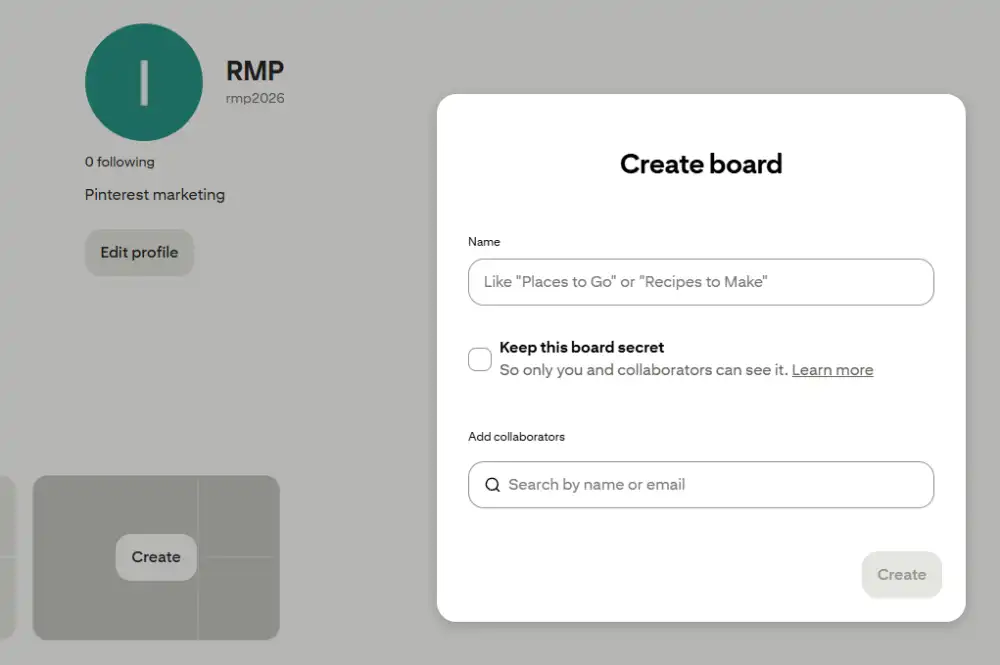
Create your own specific boards (like Keto Dinner Ideas) and pin your content there. This builds your own authority.
Myth #4: Pinterest SEO Ends After You Publish a Pin
The Myth: Once I hit publish, my job is done. It’s up to luck now.
The Fact: SEO continues for months after you post.
Pinterest is a slow-burning platform. A Pin might get zero views in the first week. Then, two months later, it might explode.
Why? Because the system is watching how users interact with it.
- The Save Signal: If one person saves your Pin to a Wedding Ideas board, that tells Pinterest exactly what your Pin is about.
- The Click Signal: If someone clicks your Pin and stays on your website to read the article, that tells Pinterest your content is good.
Why This Matters:
If you delete a Pin after three days because it has no views, you are killing it before it has a chance to grow.
What to Do Instead:
Be patient. Let your Pins sit for at least 30-60 days before you decide if they worked or not.
Myth #5: Perfect Design Matters More Than SEO
The Myth: If my Pin is pretty and aesthetic, it will go viral.
The Fact: Clarity beats creativity every time.
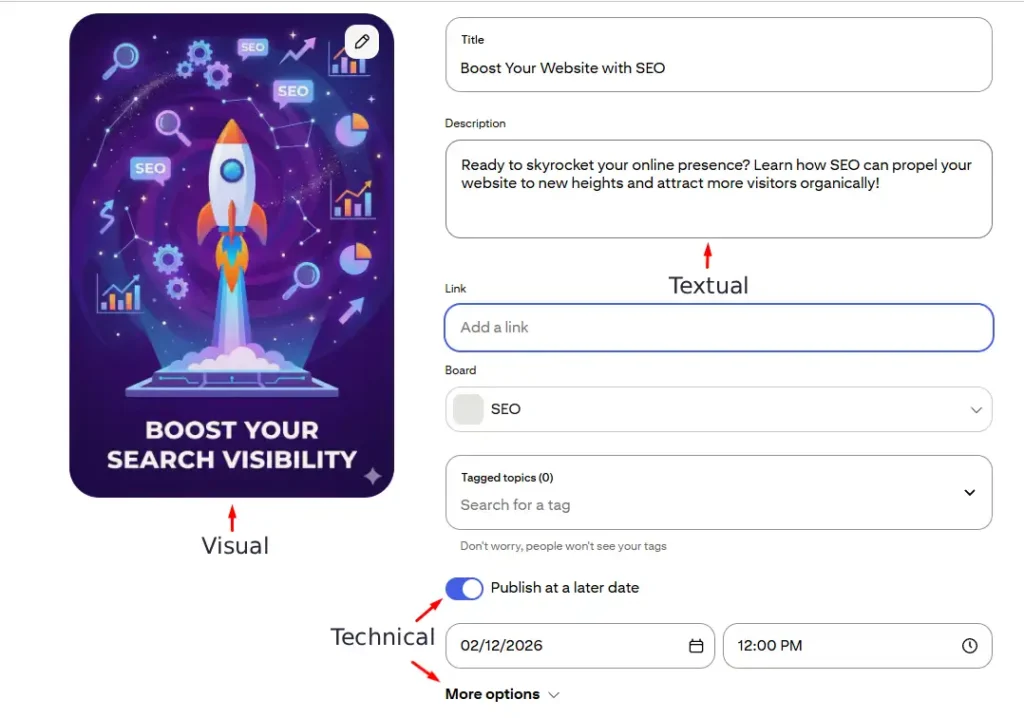
Pinterest is a machine; it scans pixels. An aesthetic image with fancy cursive text and a moody filter might look nice to you, but it looks like a blurry mess to the computer.
The Visual Readability Check:
- Hard to Read: Thin, swirly fonts on a busy background.
- Easy to Read: Big, bold letters on a plain background.
If the computer (and the user) has to squint to read your text overlay, they will scroll past. The system prioritizes images it can easily understand.
What to Do Instead:
Design for the squint test. Can you read the text on your phone while holding it at arm’s length? If yes, it’s good for SEO.
Myth #6: Hashtags Are Still Important for Pinterest SEO
The Myth: I need to add #fyp #viral #recipes to my description.
The Fact: Hashtags don’t help you anymore.
On Instagram, hashtags are how you get found. On Pinterest, they are cluttered.
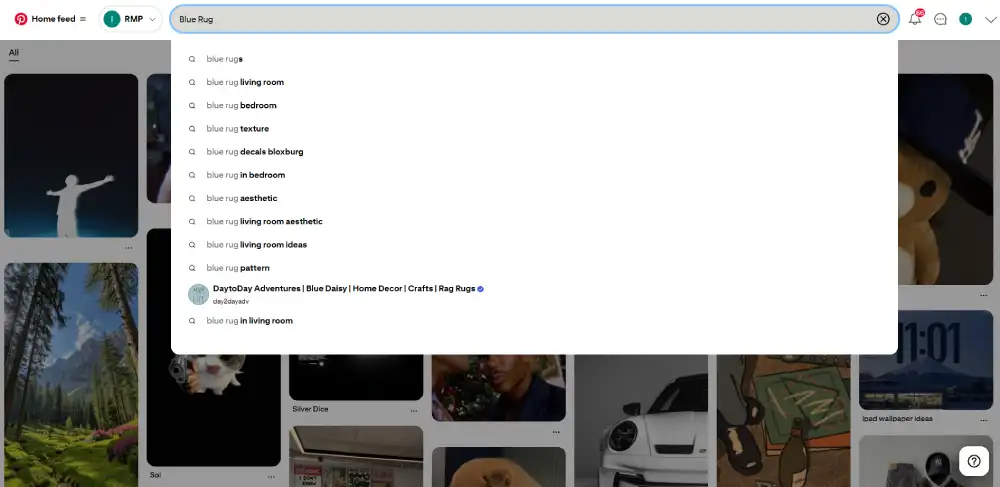
A few years ago, Pinterest tried to use hashtags. It didn’t work well. Users didn’t search for #homedecor; they searched for Home Decor Ideas.
Now, the system reads your sentences. If you fill your description with hashtags, you are wasting space. You are also taking away space that could be used for helpful, keyword-rich sentences.
What to Do Instead:
Delete the hashtags. Use that space to write a natural description. This Easy Lasagna Recipe is perfect for family dinners.
Myth #7: New Accounts Can’t Compete With Established Ones
The Myth: Big accounts rank #1. I have 0 followers, so I can’t win.
The Fact: Pinterest loves fresh content from anyone.
This is the best news for beginners. Pinterest does not care how many followers you have. It cares about the Pin Quality.
If a huge account pins a blurry photo with a bad title, and you (a new account) pin a crisp photo with a perfect title, you can beat them.
The Trust Factor:
New accounts do have a Sandbox Period (a few months where reach is low). But once you prove you are not a spammer (by pinning consistently), the gates open.
What to Do Instead:
Don’t worry about followers. Worry about answering the user’s question better than the big accounts.
Myth #8: Pinterest SEO Works the Same as Google SEO
The Myth: I rank on Google, so I know how to do Pinterest.
The Fact: Google answers questions; Pinterest offers ideas.
- Google Search: How long to boil an egg? (The user wants one specific answer).
- Pinterest Search: Breakfast Ideas. (The user wants 50 different options).
If you treat Pinterest like Google, you might make content that is too dry or boring. According to Google’s search documentation, their goal is to provide immediate answers. Pinterest users, however, are in Discovery Mode. They are open to suggestions.
The Strategy Shift:
On Google, you want to be the only answer. On Pinterest, you want to be the best looking option in a sea of ideas.
Myth #9: Once a Pin Ranks, It Stays There
The Myth: I ranked #1 for “Christmas Decor” last year, so I’m set for life.
The Fact: Rankings change constantly.
Pinterest is always looking for freshness. An old pin that ranked last year might be replaced by a newer, fresher pin this year.
Also, trends change. Farmhouse Decor was huge five years ago. Now, users might be searching for Maximalist Decor.
You can use Pinterest Trends to see what is popular right now. If your old pin doesn’t match the new trend, it will drop.
What to Do Instead:
You need to make new pins for your old content. Refresh the design to match what is popular now.
The Most Dangerous Myth: Pinterest SEO Is Set-and-Forget
This is the myth that kills most businesses. They set up their profile, upload 50 pins, and then walk away for six months.
Pinterest SEO requires maintenance. It is like a garden. You have to water it (add new pins), pull weeds (fix broken links), and plant new seeds (target new keywords).
The Content Decay Reality:
If you stop pinning, your Account Quality Score slowly drops. Pinterest assumes you are no longer active, so it stops showing your old content, too.
The Fix:
You don’t need to spend hours a day. But you do need to show up. 15 minutes a week to schedule fresh pins keeps your account alive.
Summary Table: Myth vs. Reality
| The Myth | The 2026 Reality |
| Keywords are everything | Visuals + Keywords must match. |
| More pins = More traffic | Quality > Quantity. |
| Group Boards help | Niche Boards help more. |
| Hashtags work | Natural sentences work better. |
| Followers matter | Relevance matters. |
| Set it and forget it | Consistency is required. |
Frequently Asked Questions (Pinterest SEO)
Does Pinterest help SEO?
Yes, Pinterest helps SEO in two powerful ways. First, Pinterest profiles and boards rank highly on Google Search, often appearing on the first page for competitive keywords. Second, because Pinterest is a visual search engine, optimizing your Pins allows you to rank in Google Images, driving a secondary stream of traffic to your website beyond standard text search.
How to beat the Pinterest algorithm?
You cannot beat the Pinterest algorithm, but you can work with it by focusing on Relevance and Freshness. The 2026 algorithm rewards accounts that publish new images (Fresh Pins) daily and use specific, long-tail keywords (e.g., Vegan Meal Prep instead of just Food). Consistency is the key variable; pinning 2-5 times every single day outperforms posting 50 pins once a week.
What is the 80/20 rule for SEO on Pinterest?
The 80/20 rule for Pinterest SEO states that 80% of your results will come from 20% of your content. Instead of constantly creating new concepts, identify your top-performing 20% of Pins (the ones driving the most clicks) and create fresh variations of them, new headlines, new colors, or new angles. Double down on what works rather than guessing at new topics.
What are common SEO mistakes on Pinterest?
The three most common Pinterest SEO mistakes are inconsistent pinning, broken links, and visual mismatch. Many creators pin sporadically, which hurts their account quality score. Others leave old pins pointing to 404 error pages, which signals low quality. Finally, using images that don’t match the text (e.g., a photo of a beach for a Finance Tips pin) confuses the visual algorithm and kills distribution.
What are the 3 C’s of SEO for Pinterest?
The 3 C’s of Pinterest SEO are Consistency, Content, and Curation.
Consistency: Pinning daily to signal you are an active creator.
Content: Creating high-quality, vertical images (2:3 ratio) that use text overlays to explain the value.
Curation: Saving your pins to highly specific, relevant boards (e.g., Small Bathroom Ideas instead of just Home) to help the algorithm categorize your niche.
Is Pinterest falling or dying in 2026?
No, Pinterest is not dying; it has evolved from a social network into a Visual Intelligence Engine. While viral engagement metrics (likes/comments) may seem lower than on TikTok, the search intent remains higher. Users continue to use Pinterest to plan major life purchases (weddings, homes, travel), making it one of the highest-converting platforms for traffic.
Conclusion
The difference between a struggling account and a thriving account usually isn’t luck. It’s clarity.
Successful creators don’t chase hacks. They don’t spam hashtags or join 50 group boards.
They understand the Pinterest SEO myths vs facts and focus on the basics: clear images, helpful keywords, and consistent publishing.
If you have been struggling to grow, ask yourself: Am I following a myth?
It is time to delete the old rulebook. Treat Pinterest like the visual search engine it is. Give the robot clear signals, and it will give you traffic.